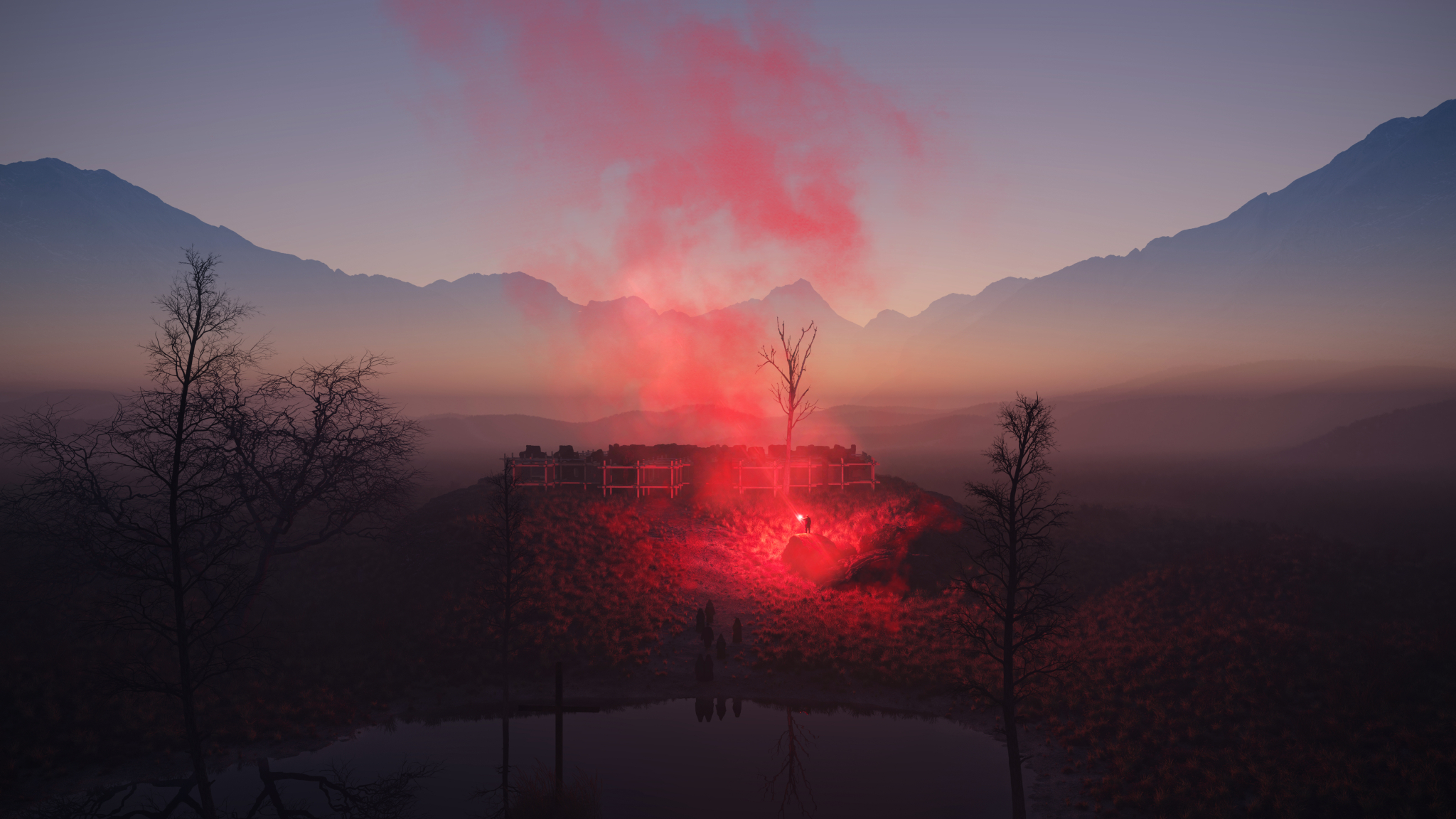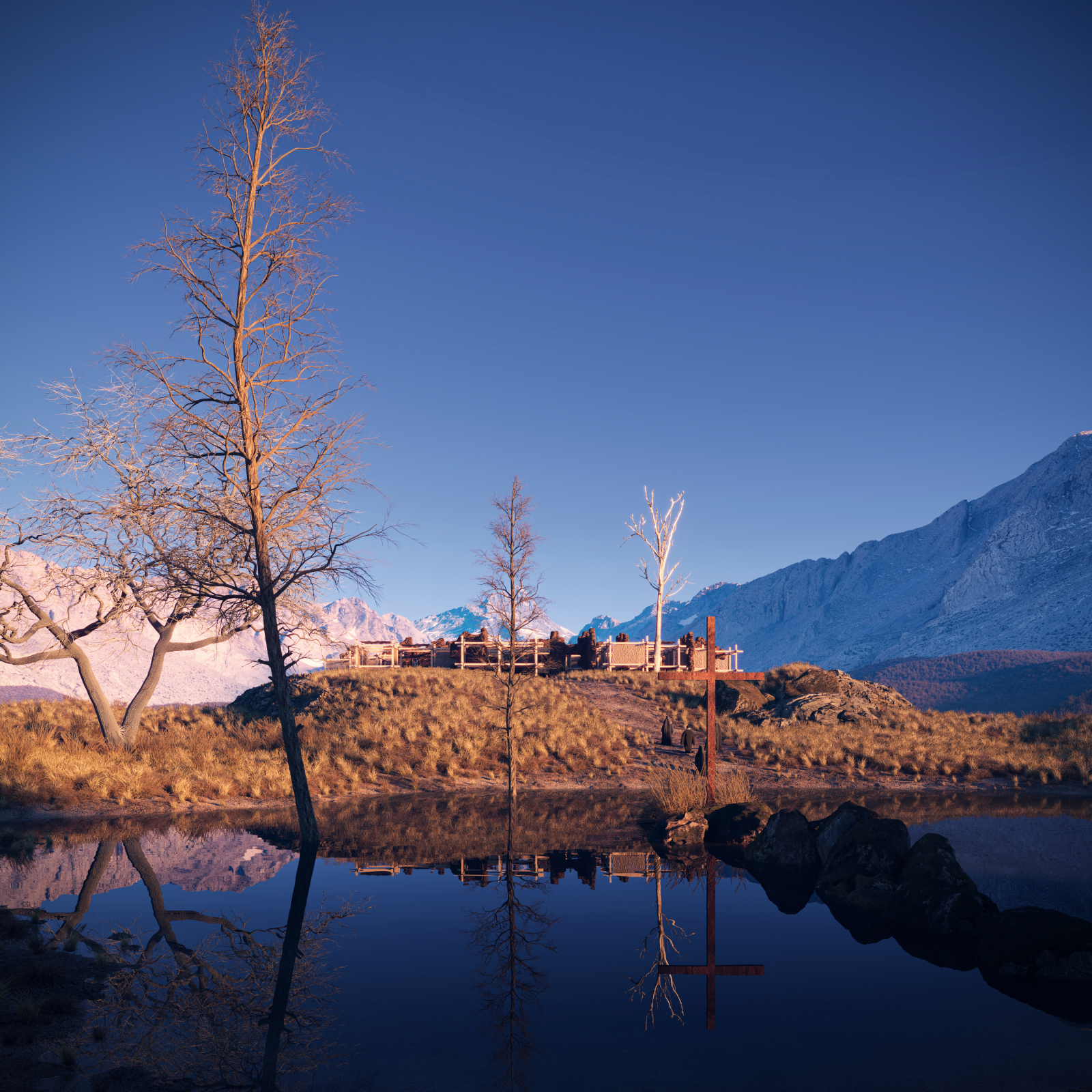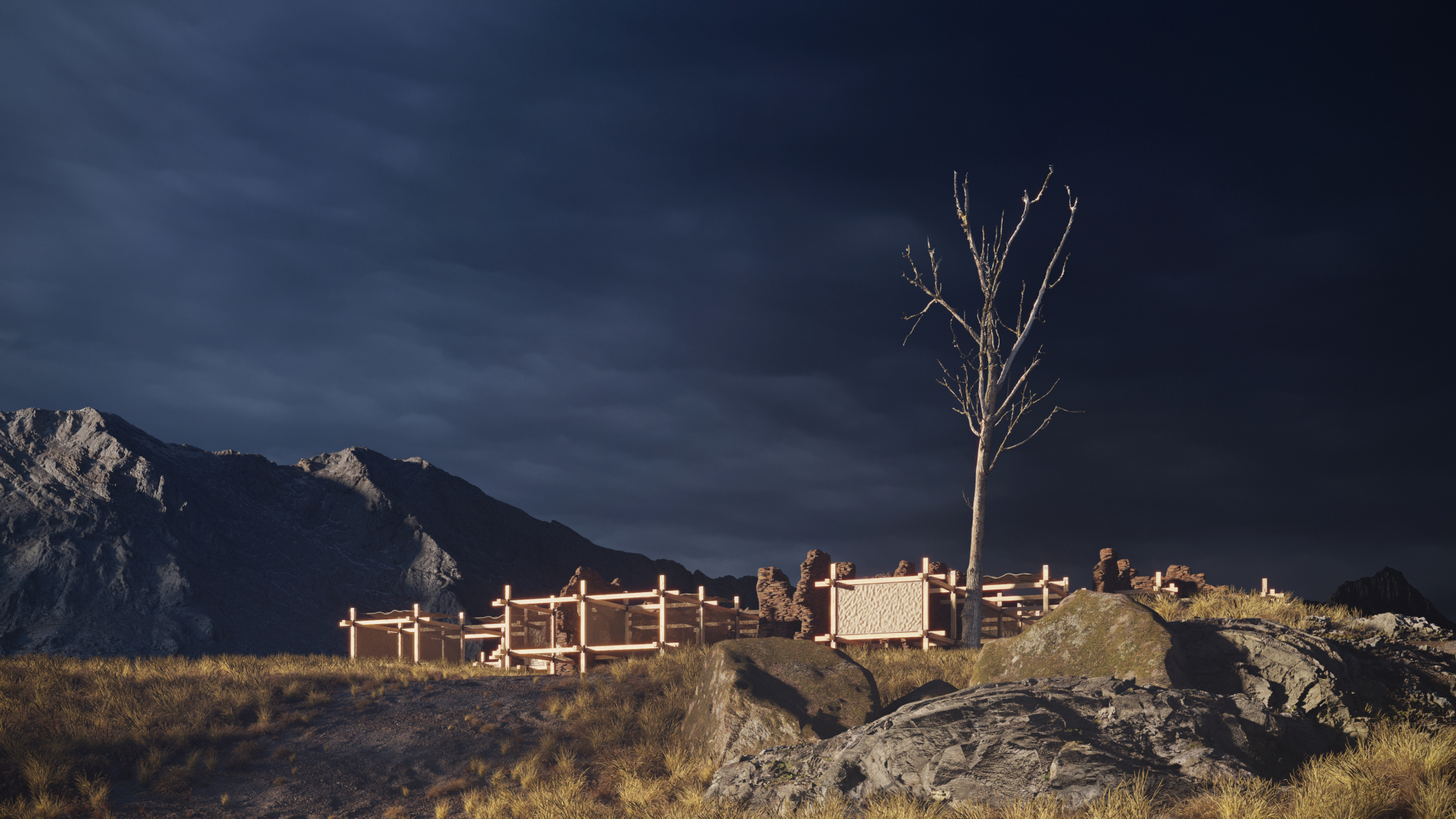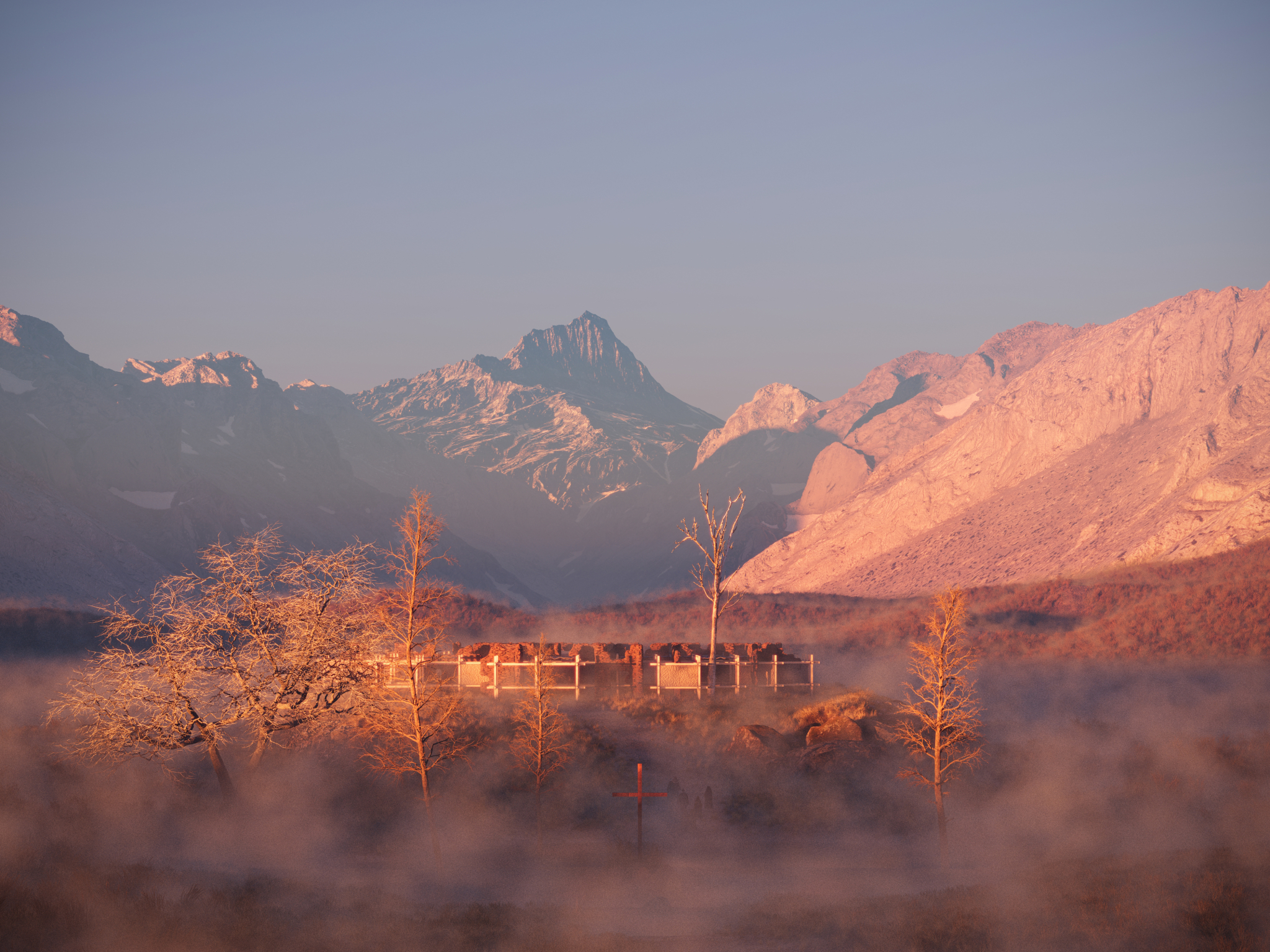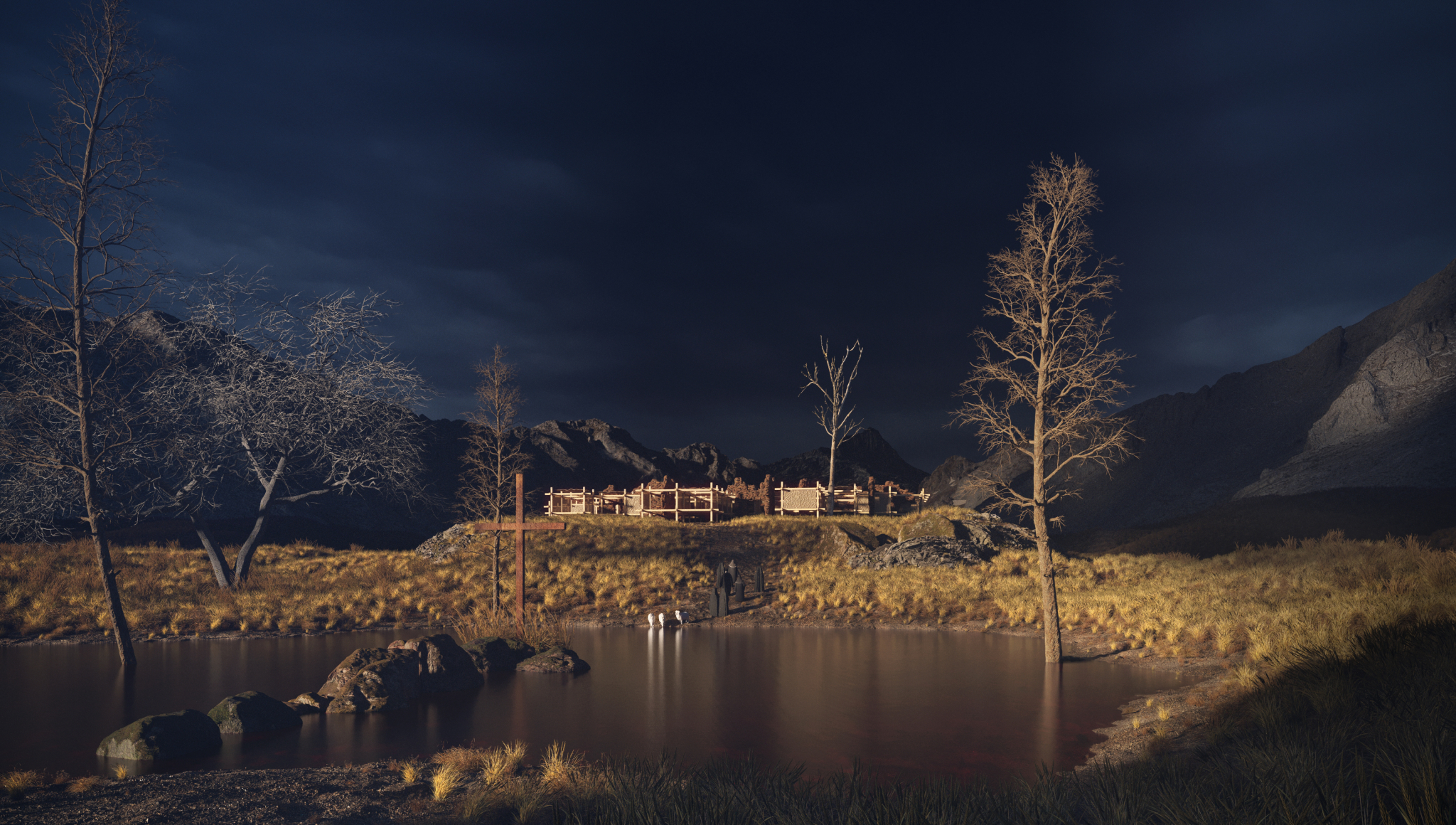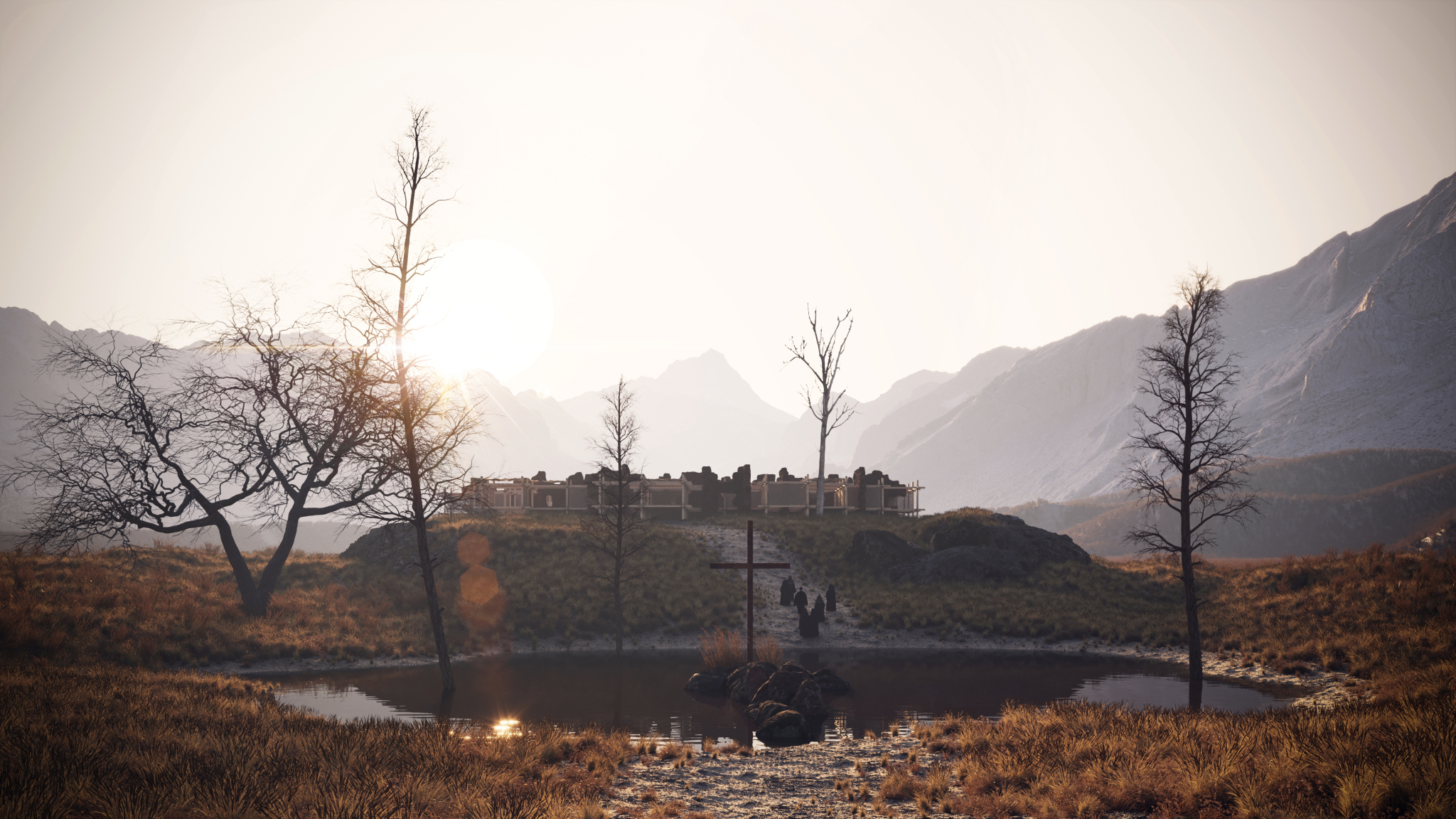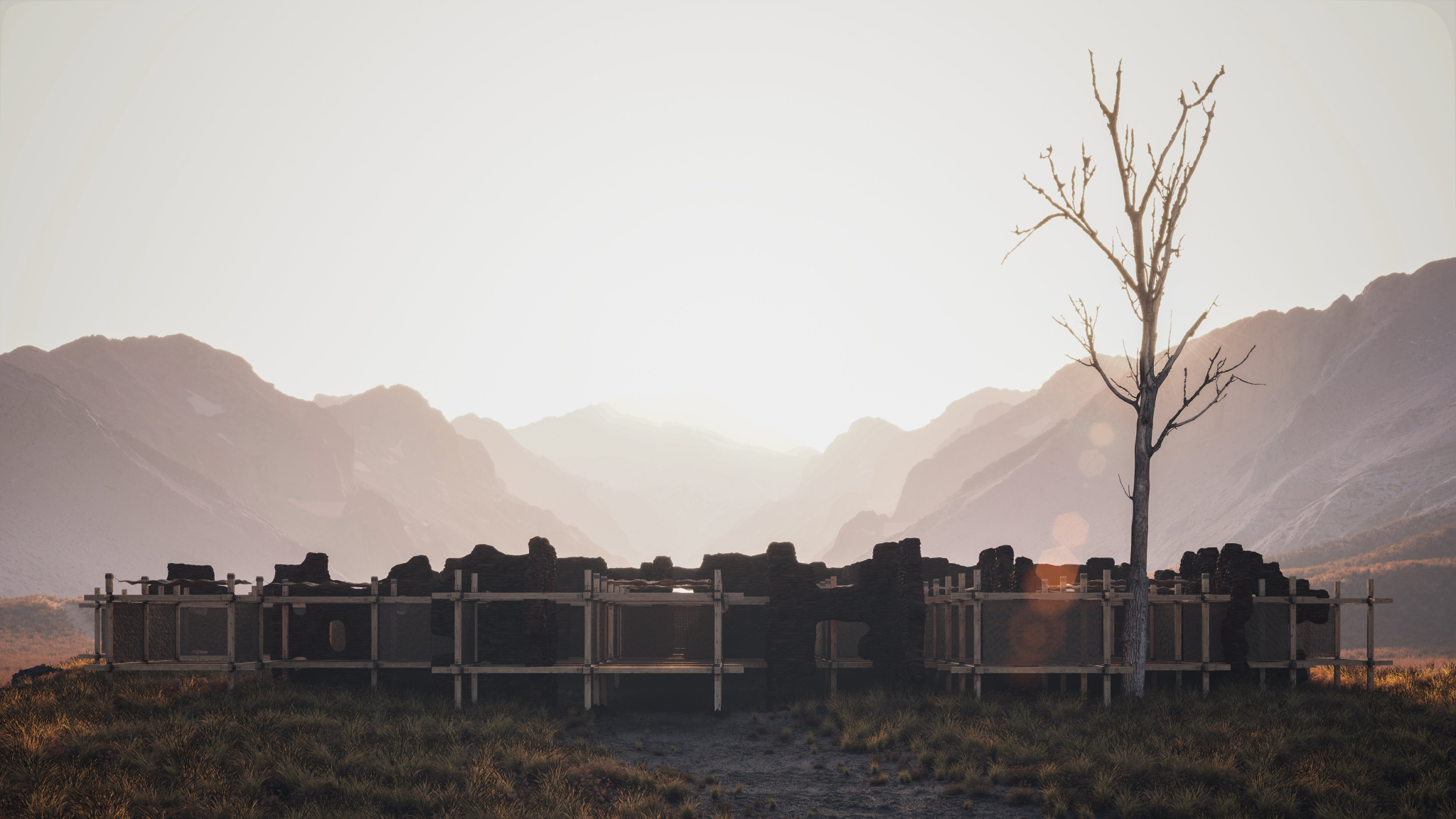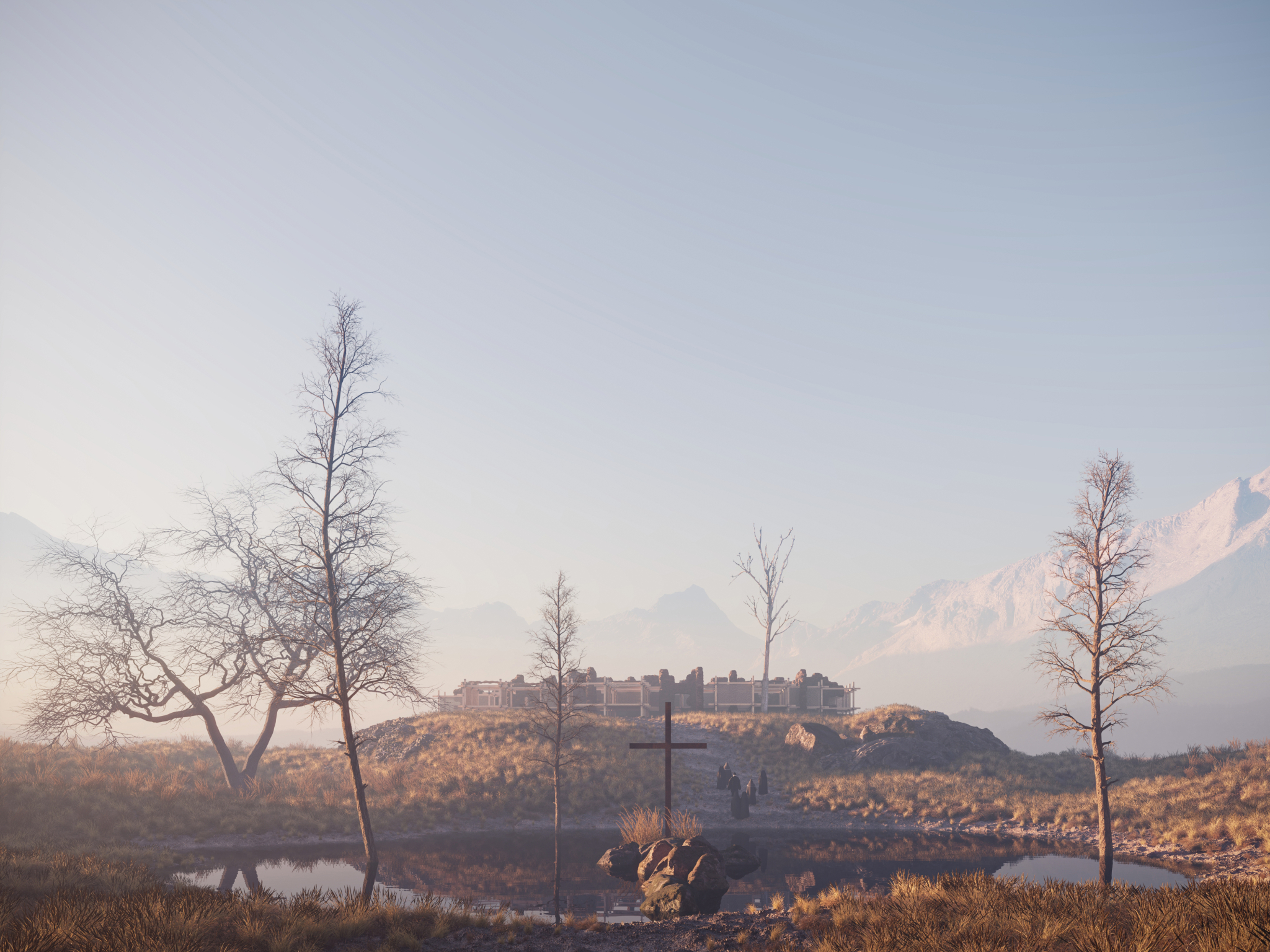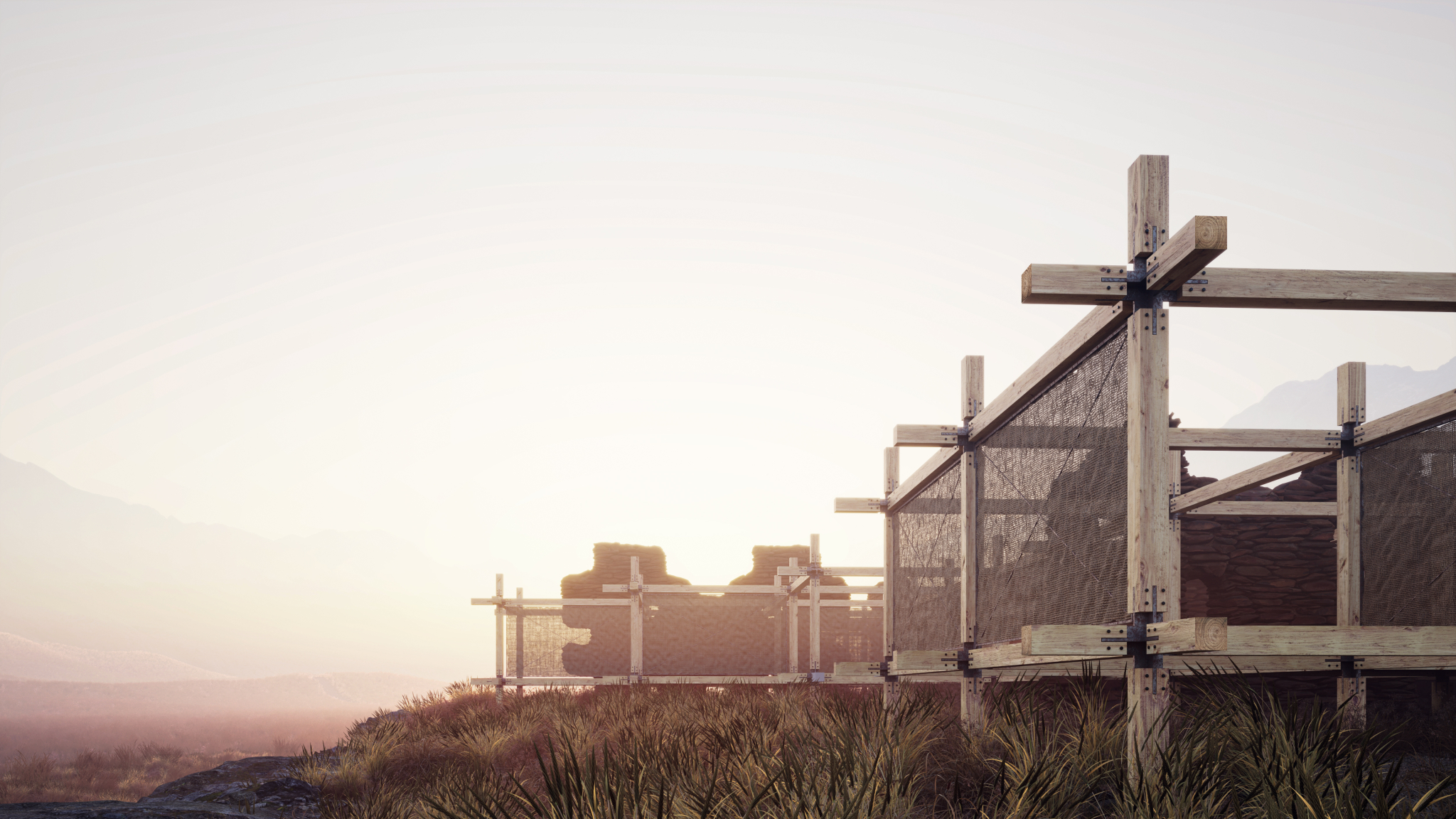














Reimagines the abandoned landscape of Georgia’s Truso Valley.
Project location - Truso Valley, Georgia
This project examines architecture as a bearer of memory and responsibility within the abandoned landscape of the Truso Valley. Shaped by belief, necessity, and irreversible decisions, the valley is understood not as empty terrain but as a place where past choices continue to occupy space.
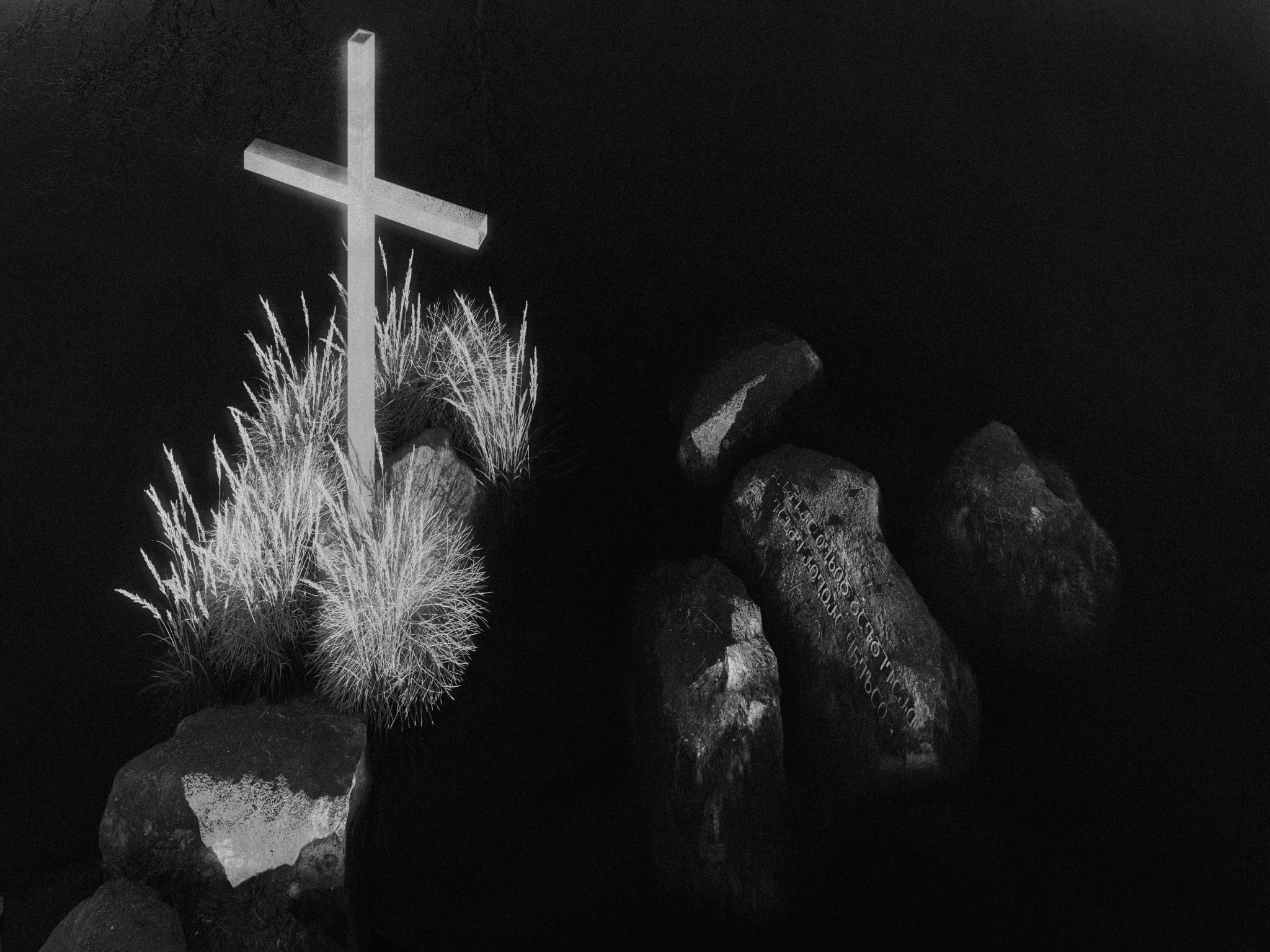
Rather than restoring or romanticizing abandonment, the project introduces a restrained architectural intervention that functions as an echo, acknowledging what remains while questioning what was once accepted as absolute. Architecture here is neither dominant nor neutral; it becomes a medium through which memory, ideology, and responsibility are made visible and open to reinterpretation.
The project is partly informed by the dream sequence and the closing lines of Vazha-Pshavela’s Aluda Ketelauri, “Alas, how blindly we walk; alas, how deep the darkness is.” This reference frames the work as a reflection on moral certainty and inherited belief, positioning architecture as a space of doubt, awareness, and quiet confrontation.