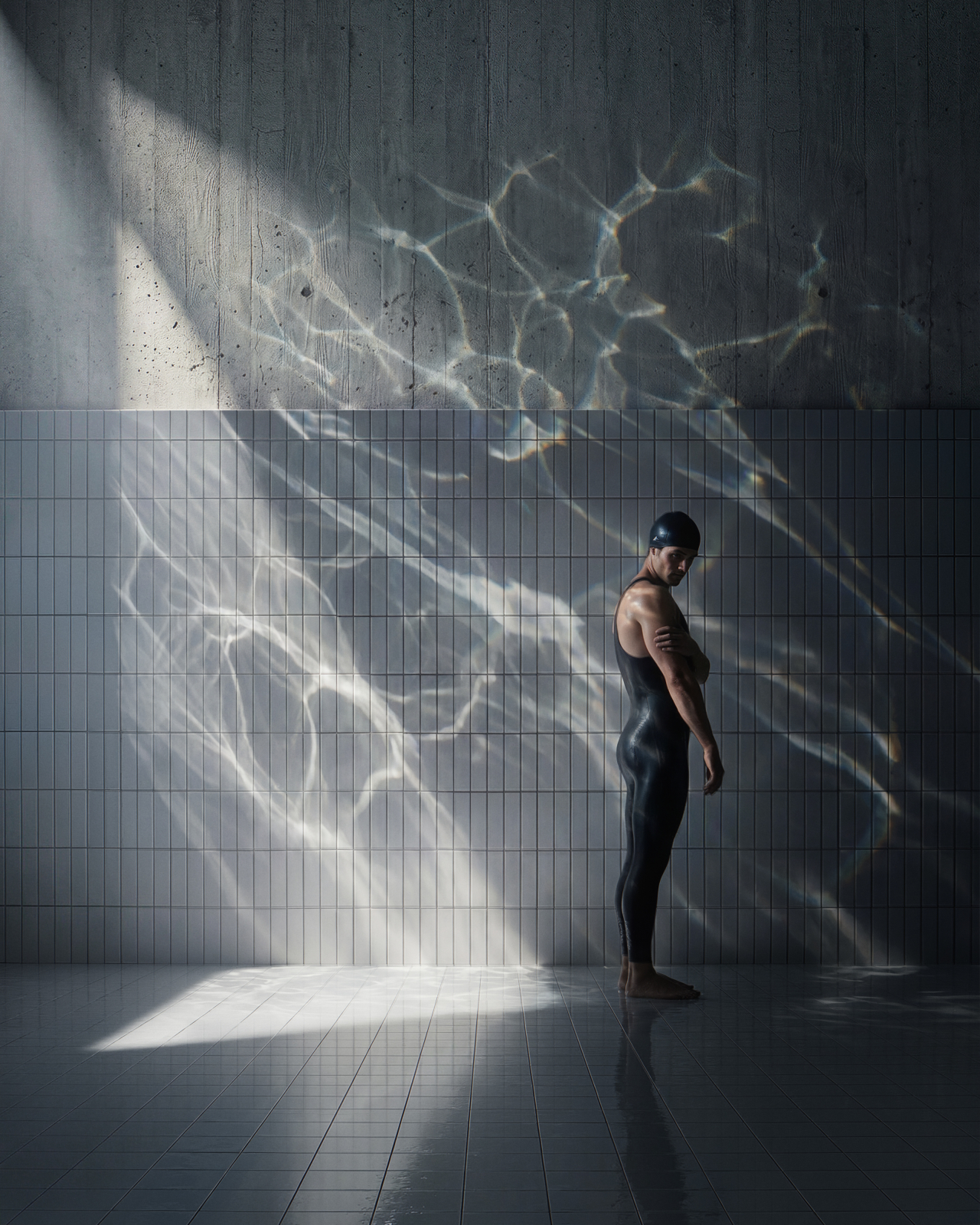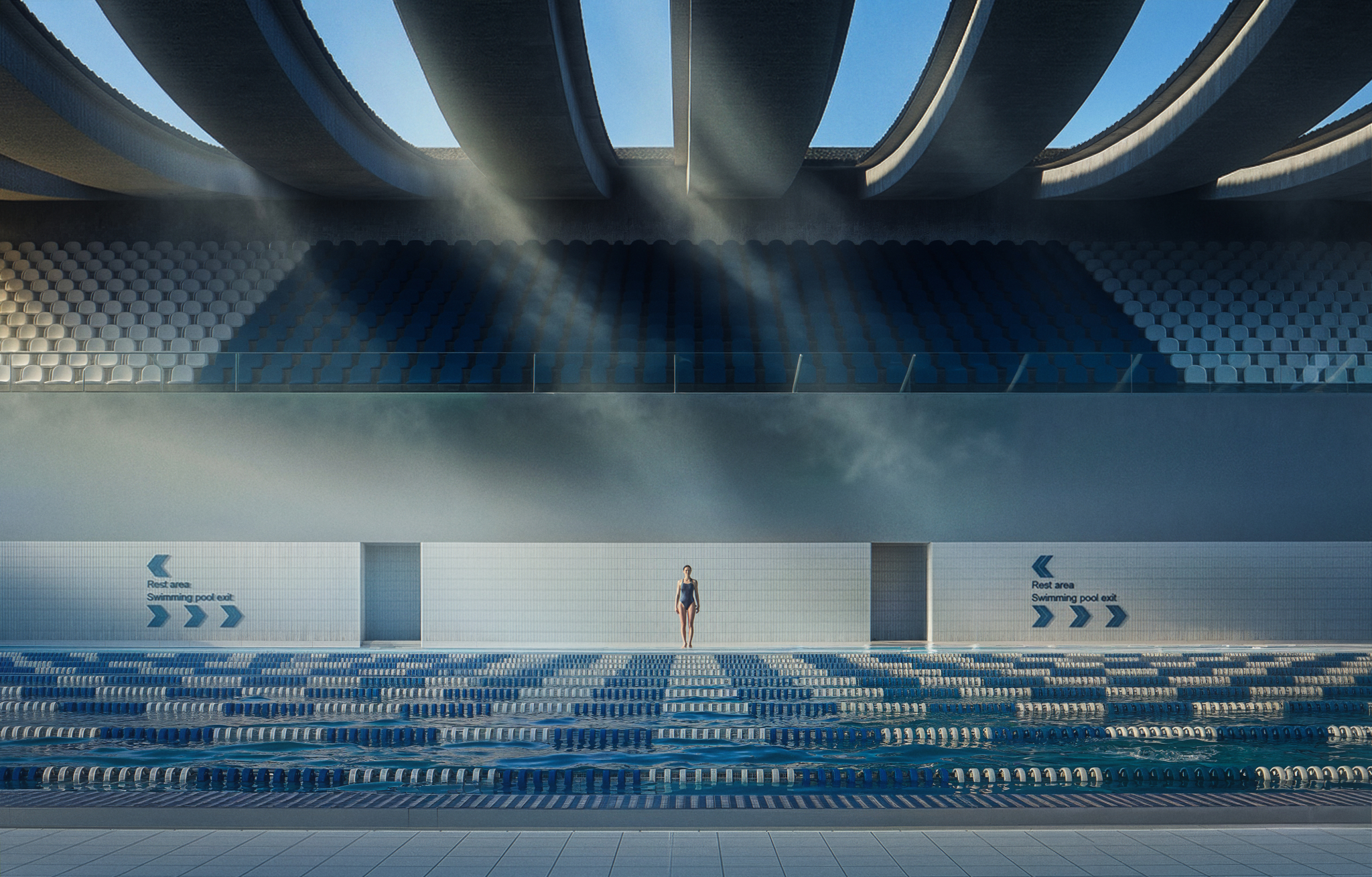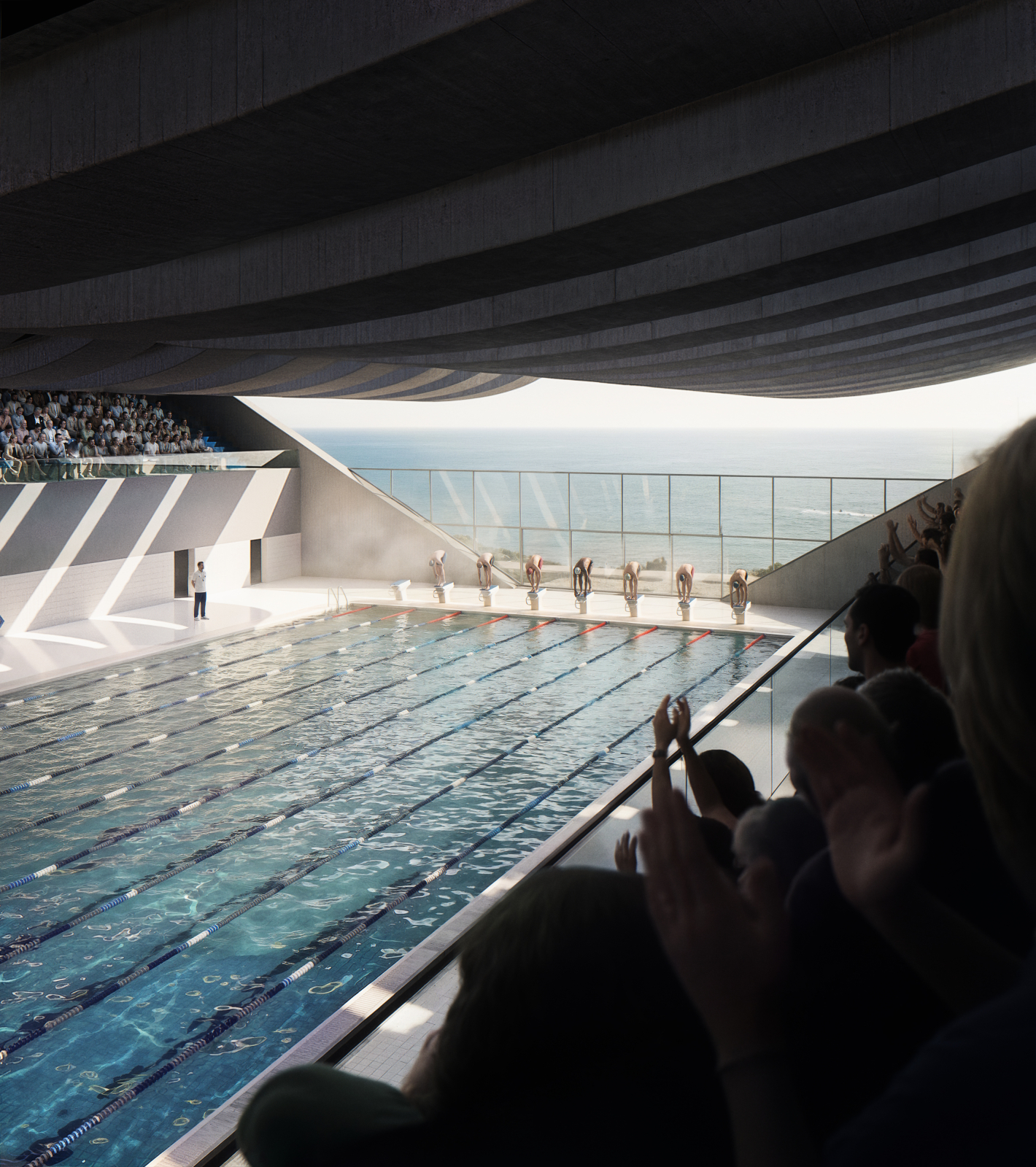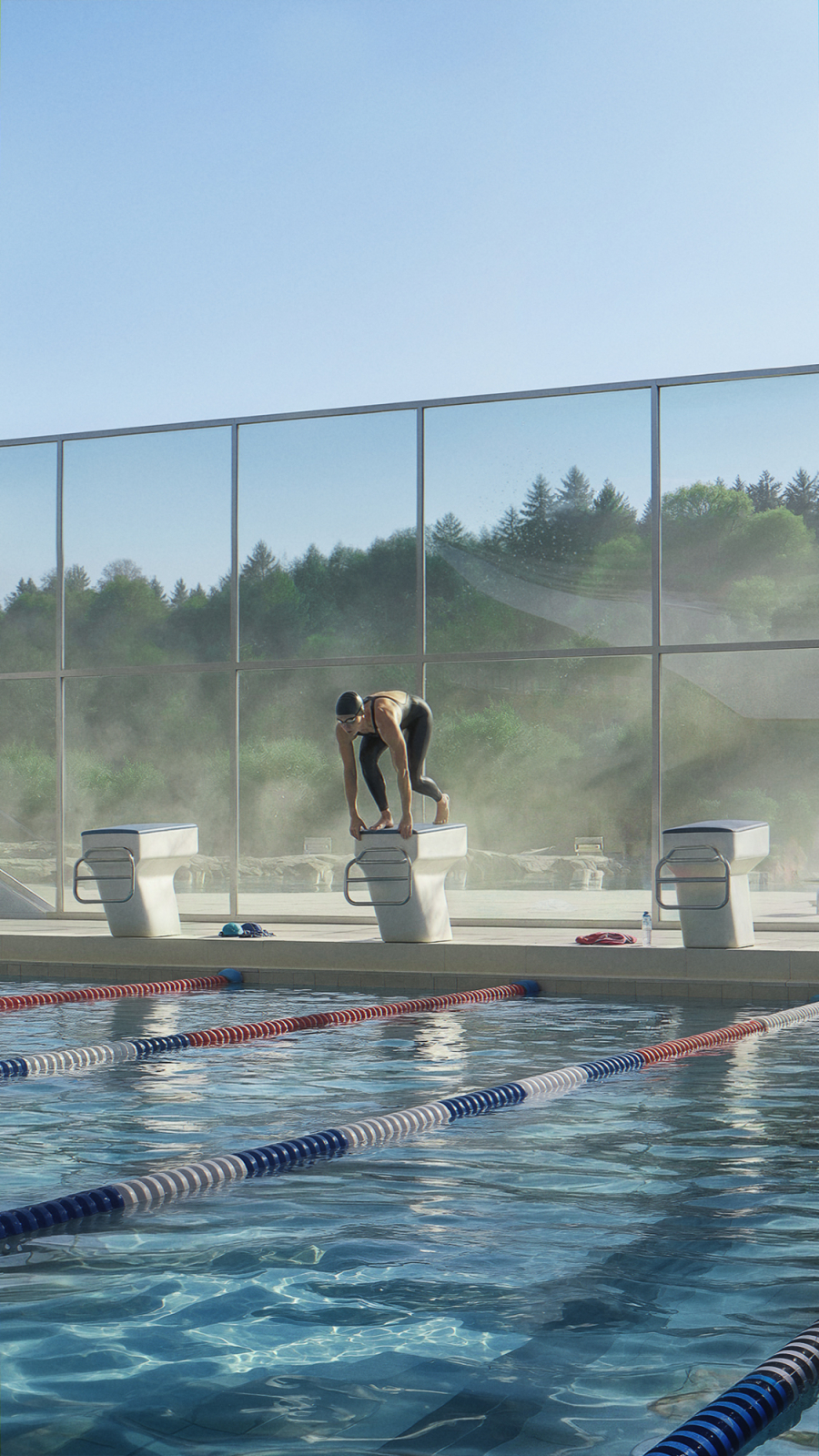














An exploration of contrast, intuition, and creative evolution
I’ve been exploring this “Olympic pool” idea for quite some time. I initially planned to develop it as my first personal project of 2026, so I spent a lot of time sketching on paper and in Miro, testing different directions and seeing what could emerge. Gradually, one architectural idea started to take shape and align with the overall concept.
At first, I was drawn to the idea of placing a large pool in the middle of the desert. Conceptually, it felt strong. I liked the irony and the contrast, especially the interplay between the blue of the water and the warm tones of the sand. However, once I began modeling in 3ds Max, something didn’t feel right. The architecture and the environment weren’t supporting each other, and it became difficult to connect with what I was producing.
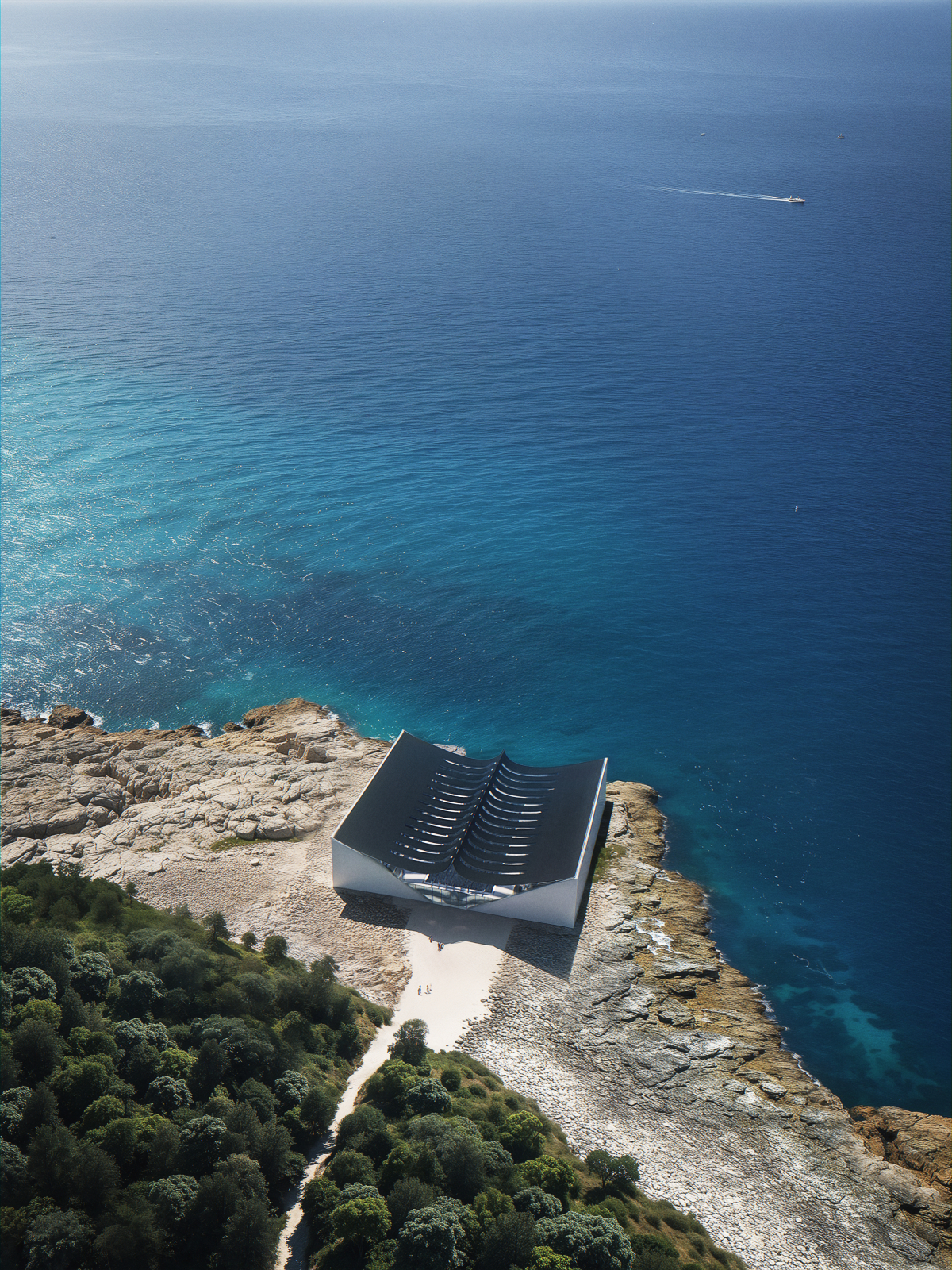
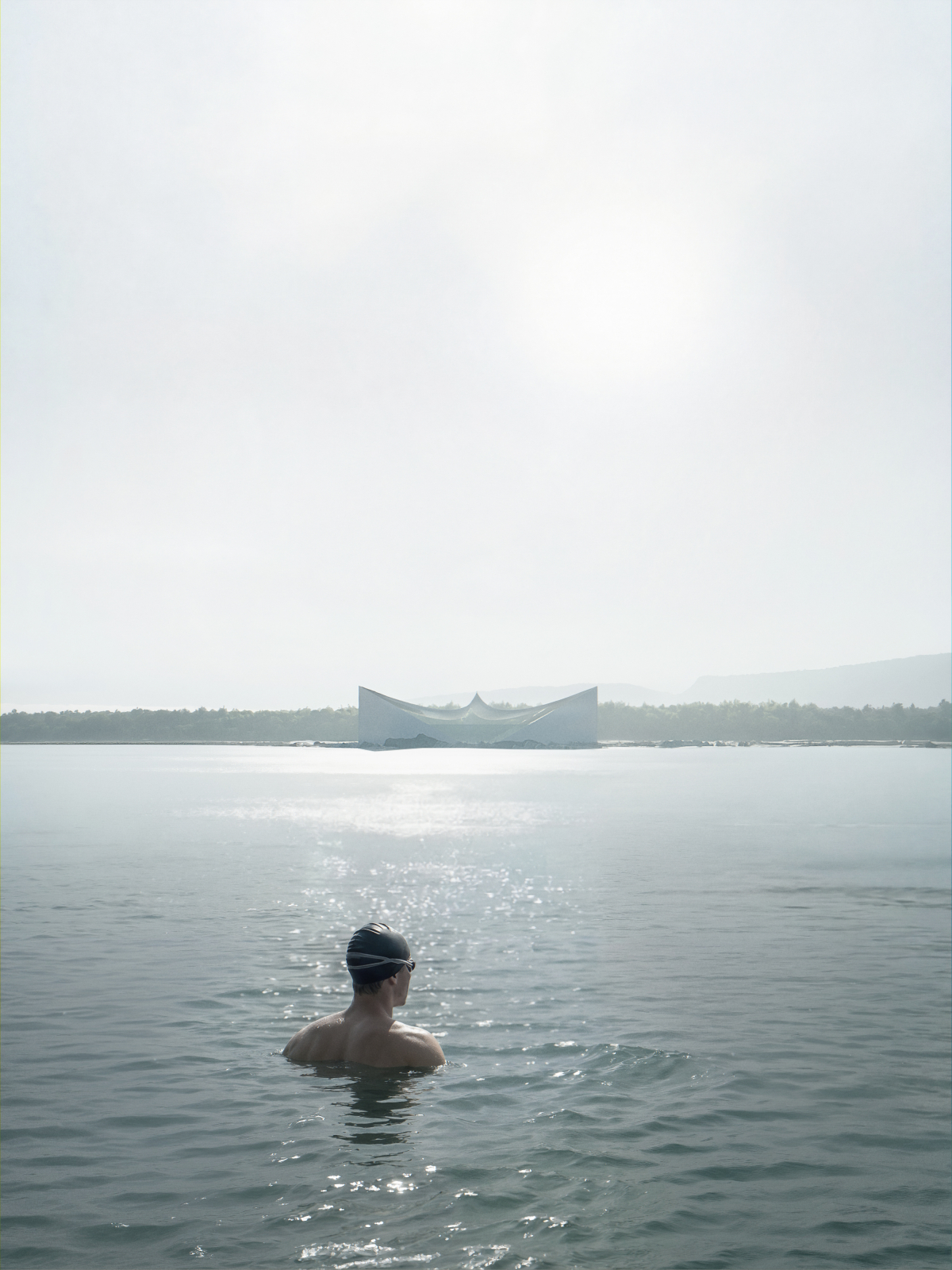
Since this was a personal project, I allowed myself to shift direction. After about a month, working on it alongside other projects, I felt the need to move forward decisively. I chose to abandon the initial concept and explore the opposite idea: placing the project in the middle of the ocean.
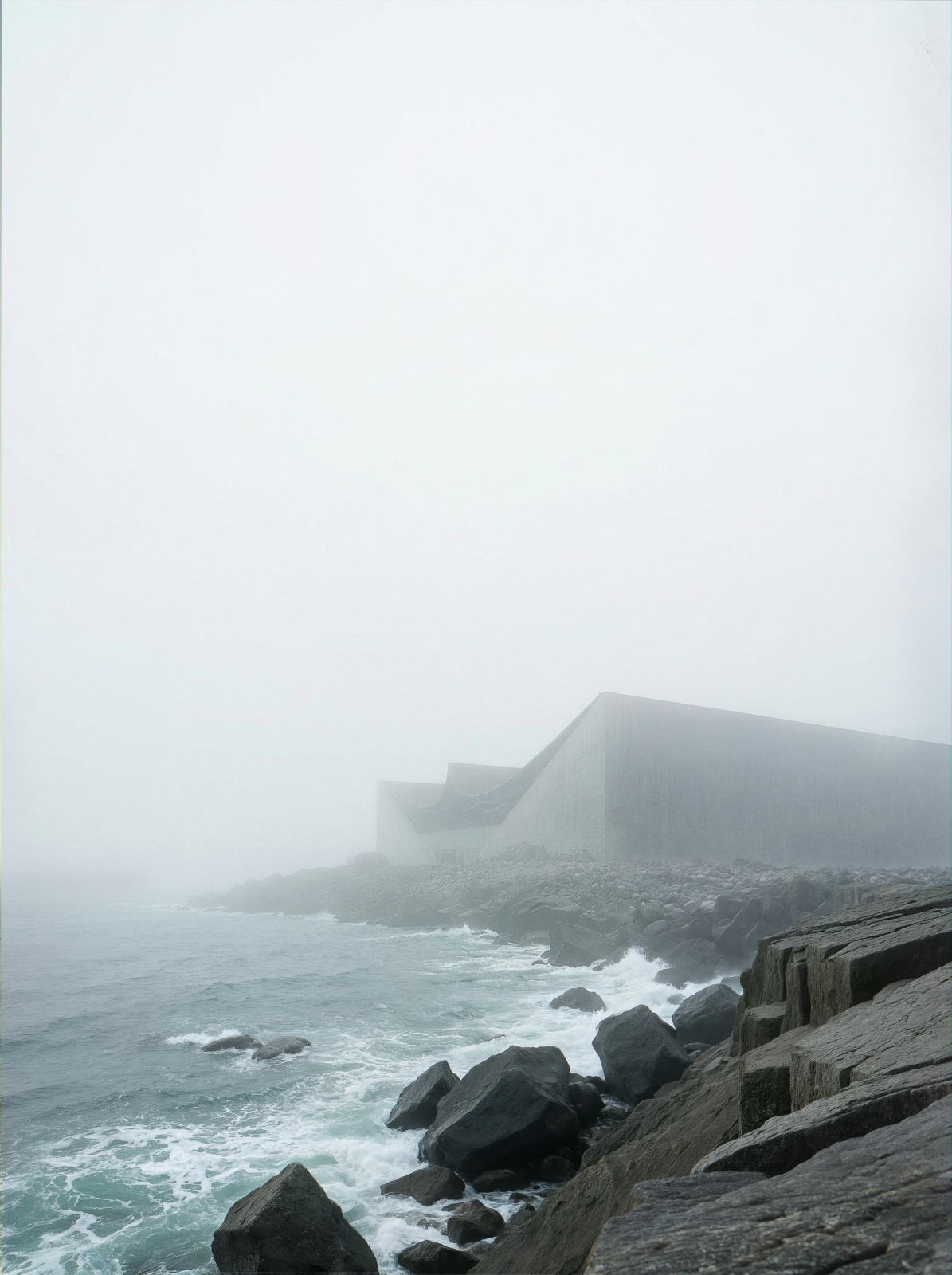
One night, while listening to music, I opened Google Maps and started browsing coastal areas, looking for inspiration. I ended up in Croatia, where I found a small piece of land with a very interesting shape. As I explored user-uploaded photos, which are actually great references for matte painting, everything clicked. From that point on, I started modeling the environment, and the whole project began to make much more sense.
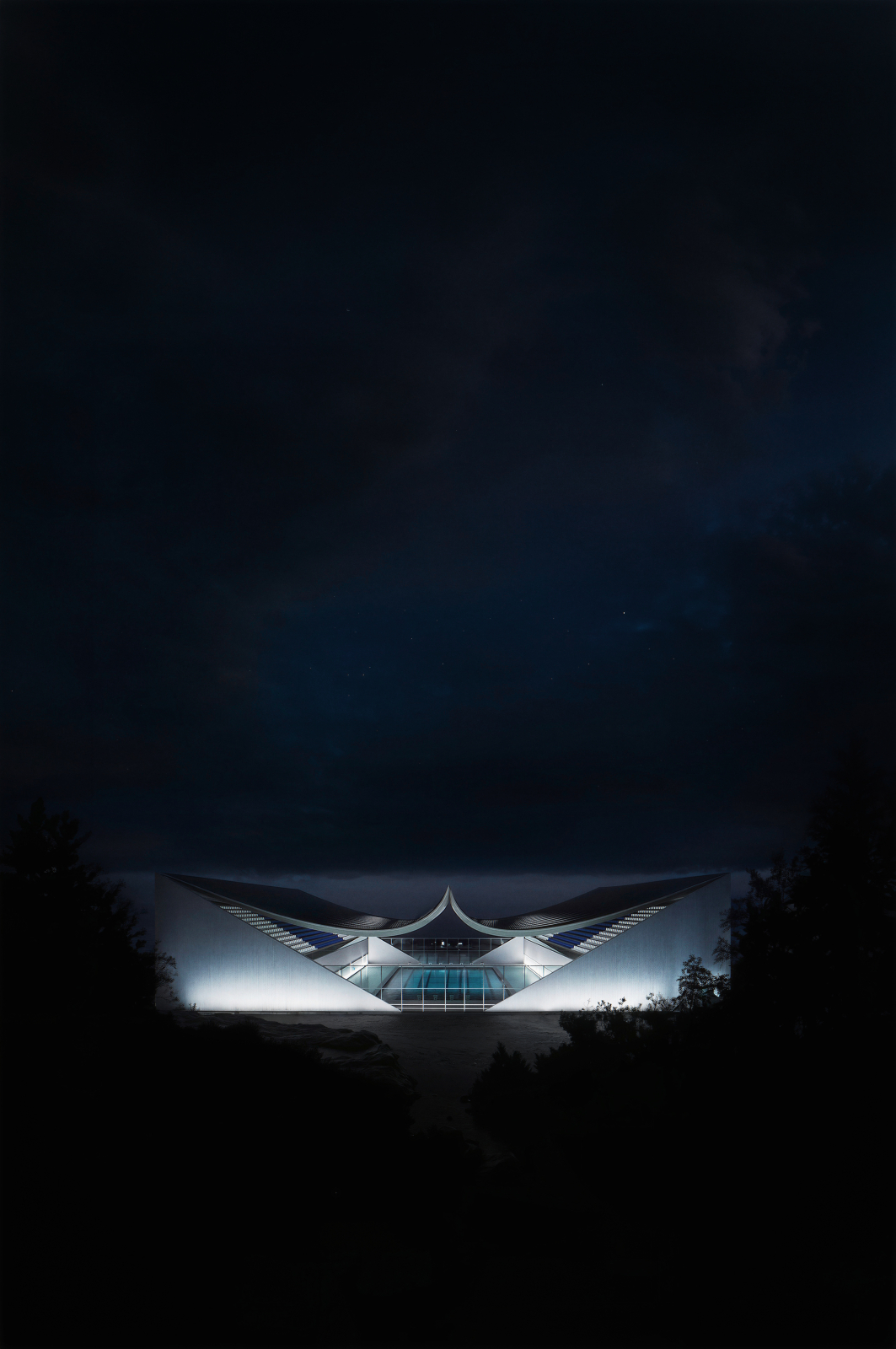
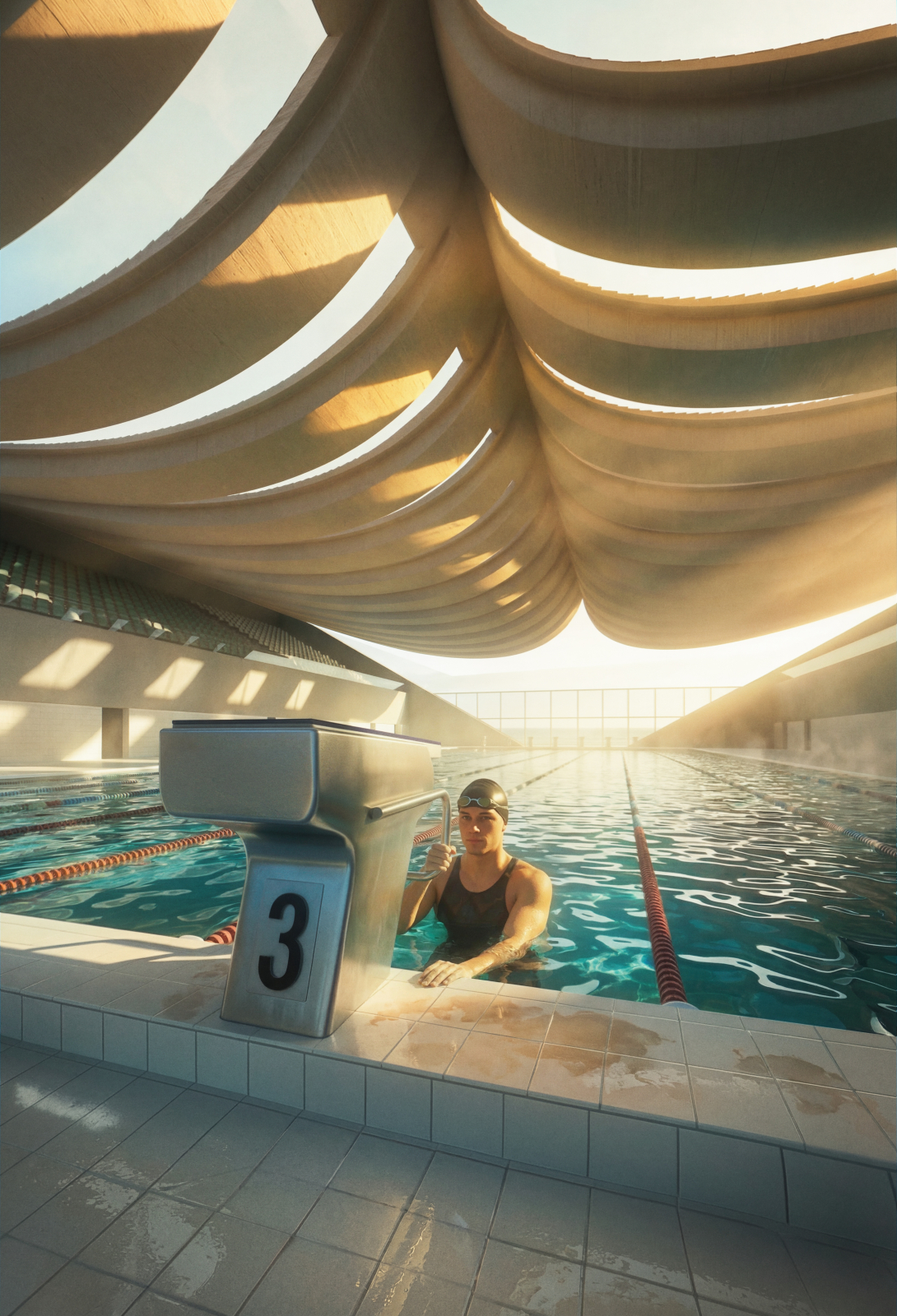
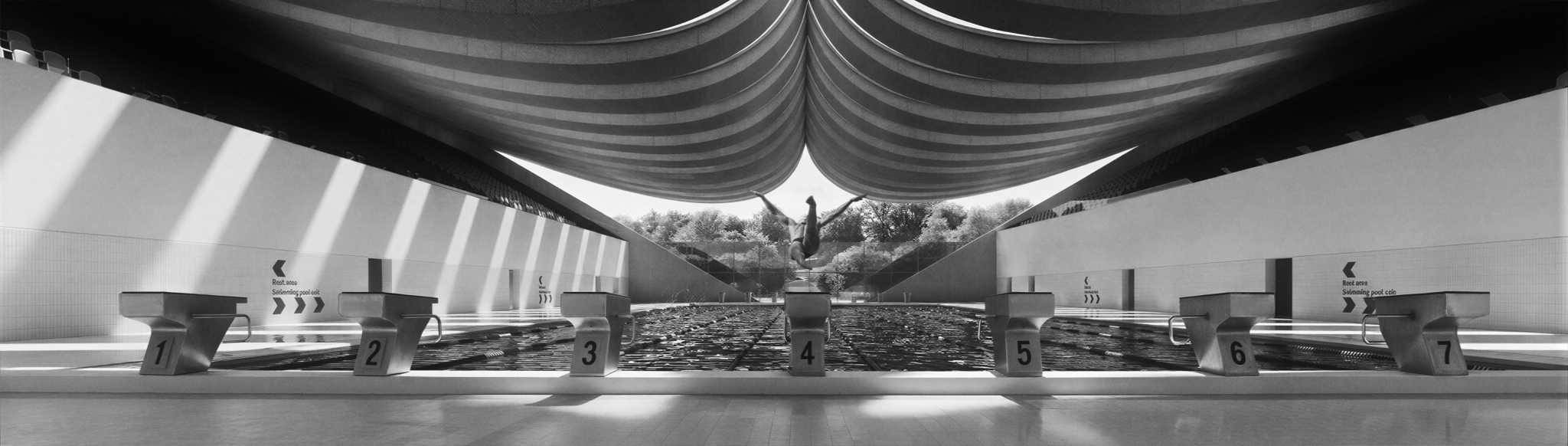
The building’s form, especially the ceiling, was inspired by the movement of swimmers diving into the water with their arms extended. That gesture became the core idea of the design. To bring light into the space, I introduced large rectangular openings in the ceiling, subtly referencing fish gills, which felt appropriate given the ocean setting.
I began with one or two clear conceptual ideas, and from there, the process became more exploratory. It was largely about trial and error, understanding what worked and what didn’t. Having strong references played a key role throughout.
While developing the project and listening to music, I decided to expand it into an animation. Since this is a personal piece, I wanted to experiment with new tools, particularly AI, and combine them with my background in music production. The goal was to present the space through a more dynamic and narrative-driven sequence.
As I don’t have extensive experience with animation, I used Miro to map out ideas, collect references, and write notes to guide myself during the editing process. This helped structure the sequence and maintain clarity between shots.
The story itself revolves around resilience and achievement, while also touching on the idea of confronting and overcoming past trauma.